
How A $5 Calf Started It All
Our start in farming wasn't exactly a promising one.
Back in 2000, we were living in a subdivision on 1.2 mostly-wooded acres. Dad would take us girls to the livestock auction just to see the animals, and one day we saw a calf for $5.
Five dollars seemed like a pretty good deal.
There was just one problem: the calf was sick. Really sick.
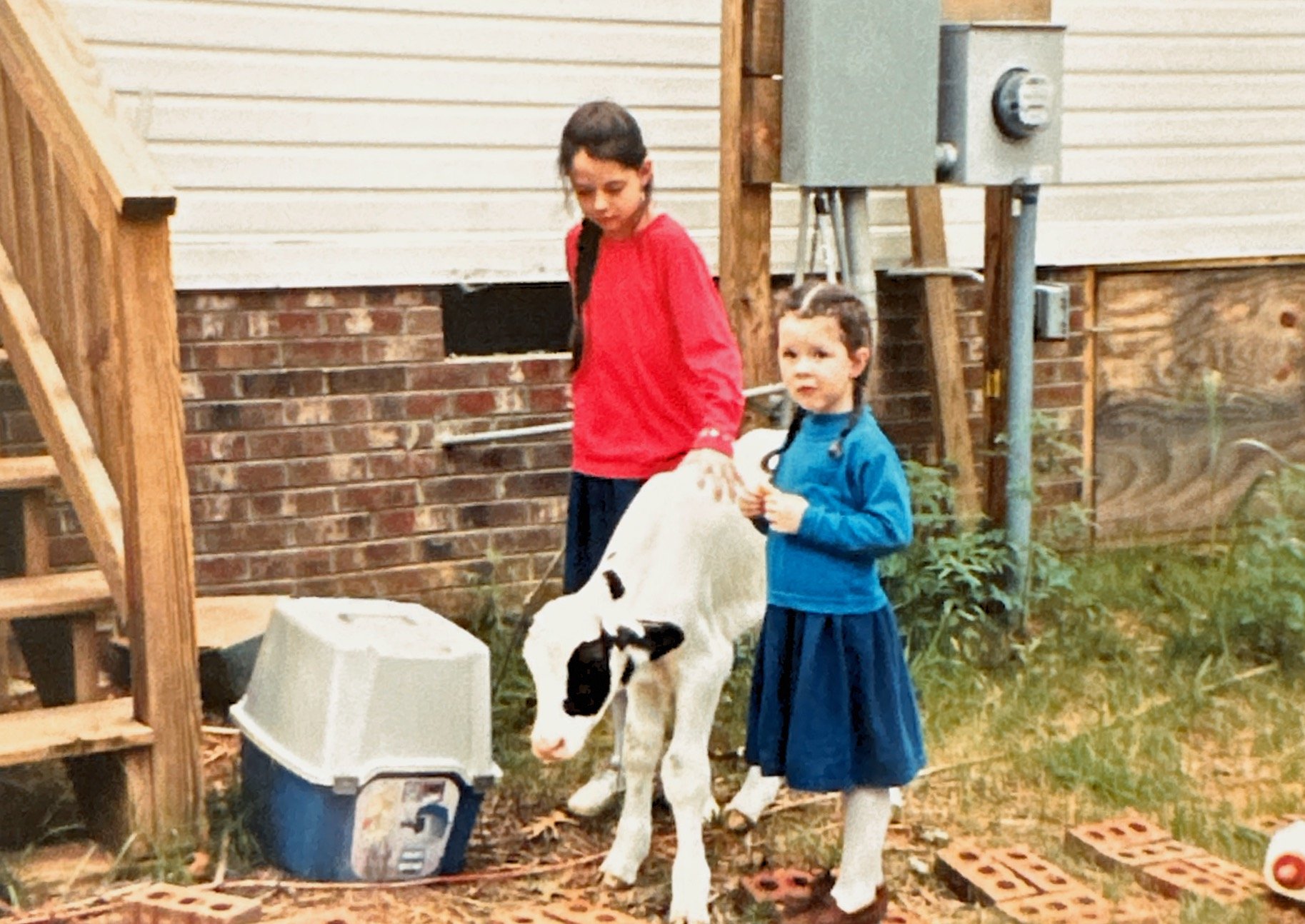
Everyone else at the auction apparently knew it wasn't going to make it, which is why nobody else was bidding. We, on the other hand, knew about as much about taking care of livestock as you might expect from a family whose animal experience consisted mostly of a house dog. (Dave and Beth had both grown up as city kids, although Dave's grandmother lived in the country and she had a neighbor with cows. Seeing cows was about the extent of his experience.)
So we brought the calf home—in the back of a minivan, because we didn't have a cattle trailer— named it Spot, and did our best to take care of it with the vet’s advice.
The calf was so weak that it stayed in our yard behind a single strand of floppy barbed wire. We cared for it as best we could, but it died three or four days later.
It probably wasn't the most encouraging introduction to raising livestock, but somehow it had the opposite effect. We wanted to keep going.
By the following year, we had moved to a house in the country with three acres of pasture. So, naturally, we went back to the auction.
This time we at least came home with a healthy animal, Brandy—a pregnant sheep. We just didn't know she was pregnant.
A few weeks later, we walked outside one morning and found her standing there with twin lambs.
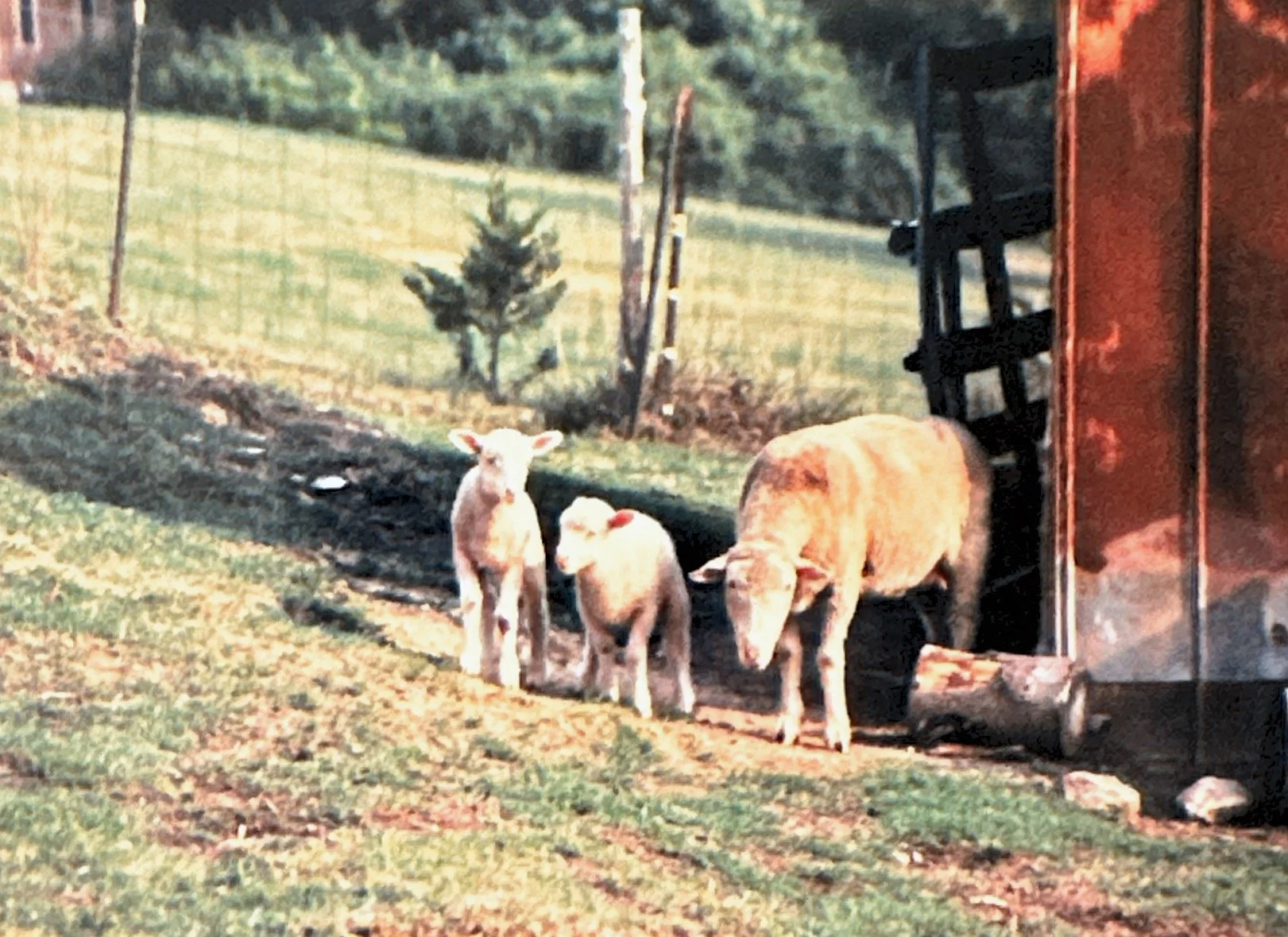
And that was pretty much it. We had caught the farming bug.
Over the years, we’ve raised sheep, goats, chickens, rabbits, turkeys, cows, pigs, llamas, a few miscellaneous cats and dogs, and even bees. The number and variety of animals changed over time, but one thing that stuck with Dad was his dream of having a Jersey cow for milk.
We finally got our first Jersey in 2011.
She was about as contrary as a cow could possibly be. The first time we tried to get her into the shed for milking, we fought with her for more than an hour. Dad hand-milked her twice a day, and she was a kicker. She split more than one pair of his jeans while he was sitting beside her milking, but thankfully, she never caused any serious injuries!
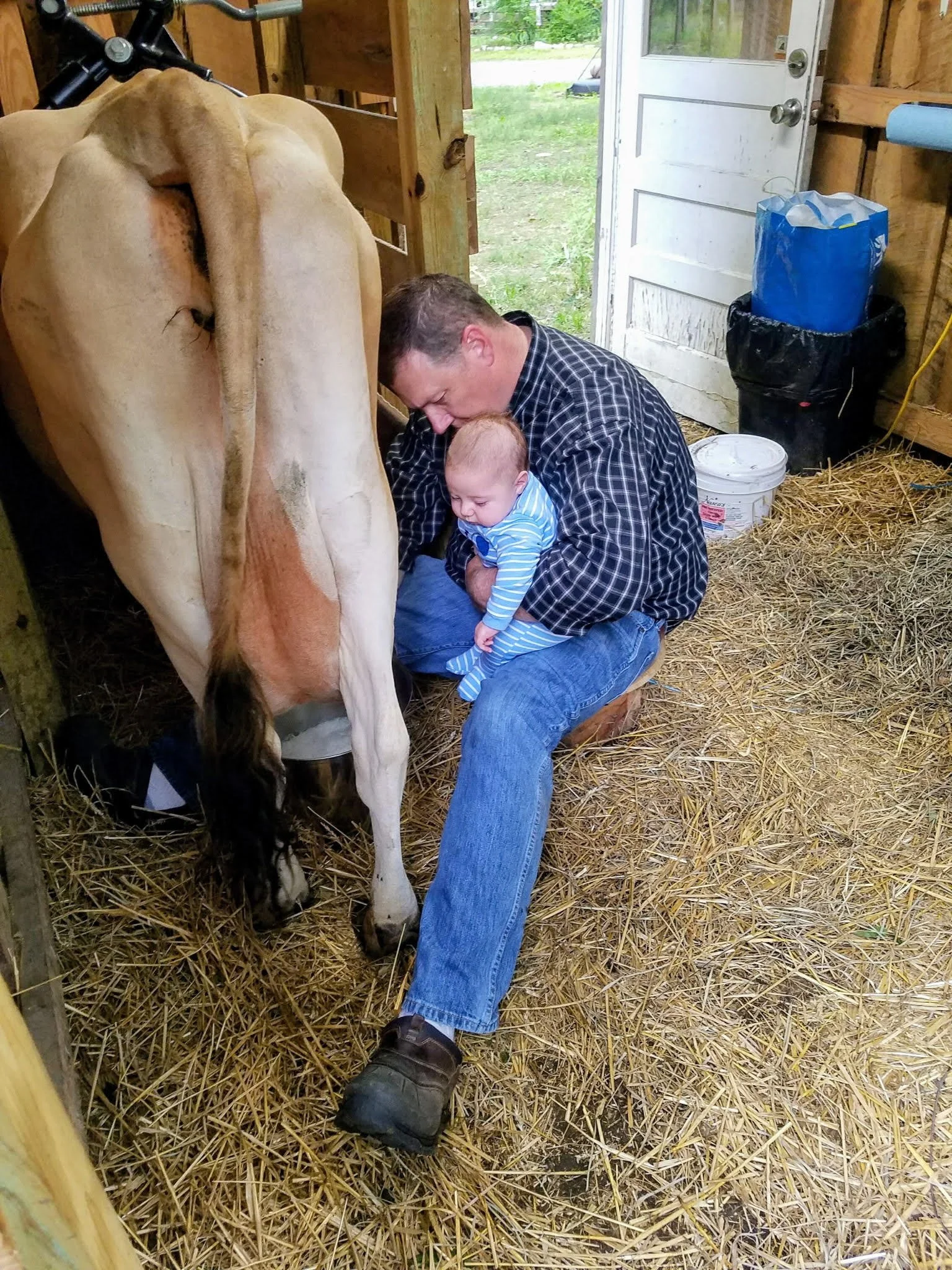
We eventually stopped milking in 2013 and found good homes for our Jerseys. It was nice to have a break from being tied to the farm twice a day.
But the desire for our own milk never really went away.
Mom and I both drink a lot of milk. (I average at least half a gallon a day🫣) We also wanted more independence from the grocery store and loved the flavor and quality of fresh milk.
In 2021, while mom was travel nursing, I decided to try getting my own milk while I was running the farm on my own.
I wasn't sure I could handle a cow by herself, so I found two Alpine goats in milk on Craigslist - that experiment didn't last long. 😂
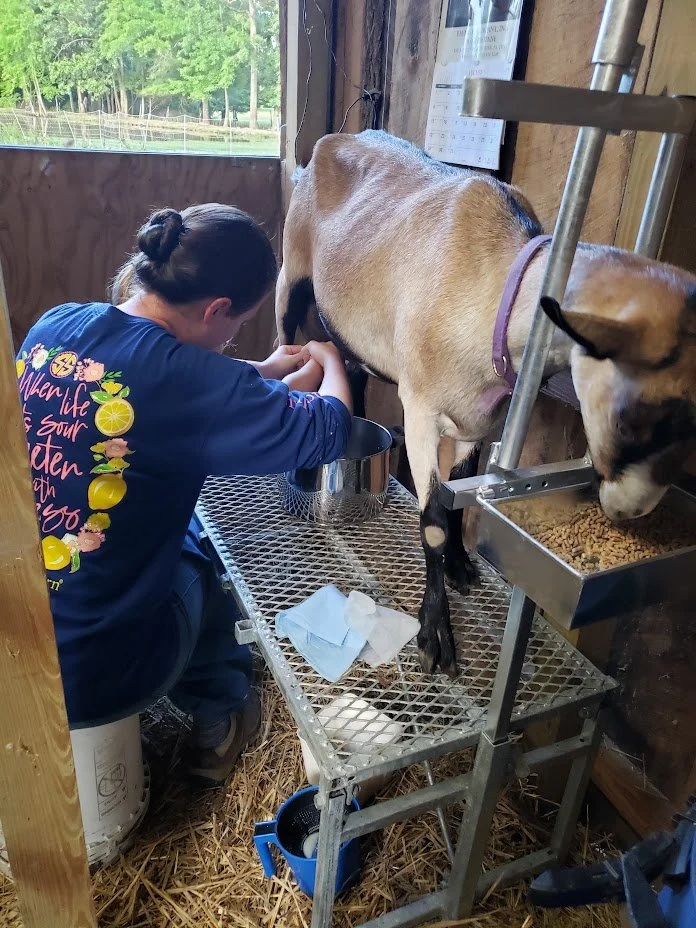
The milk didn't taste like cow's milk to me, and the goats had a serious disagreement with our Great Pyrenees dogs and so they eventually found their way to other farms.
Then, in 2022, we stopped by Teague's Farm Market for our regular feed run. Michael Teague mentioned that he knew a man with two very gentle Jersey cows that were just old enough to breed and needed a good home.
Dad and I went to take a look and the cows were exactly as advertised. They were tame enough to walk right up to us in the middle of the pasture. We could pet them, check their udders, and handle them without a fuss.
We brought them home and that's where the story of our herd share really begins.
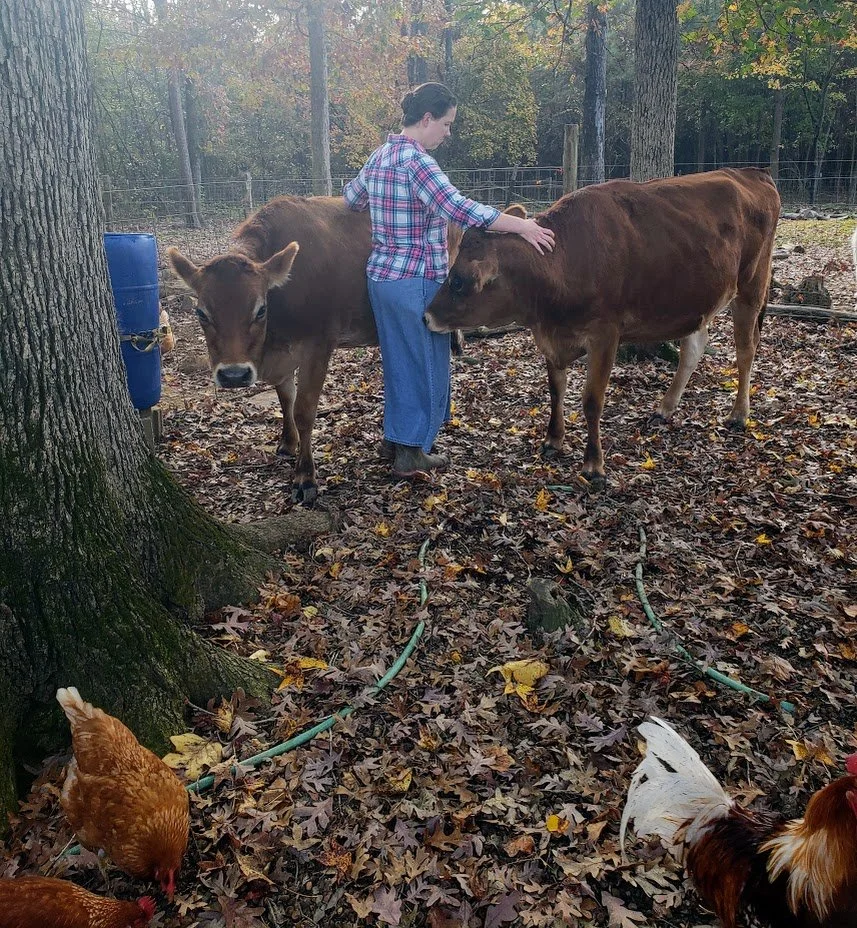
One cow was producing more milk than our family could possibly use. Then we had two cows.
We contacted our county ag extension agent, who came out with the area dairy agent to talk with us about our options for the milk. We decided that a herd share made the most sense for most of the milk we could reasonably expect to produce each week, with extra milk available as pet milk.
We certainly didn't expect what happened next.
Our herd share grew—and kept growing.
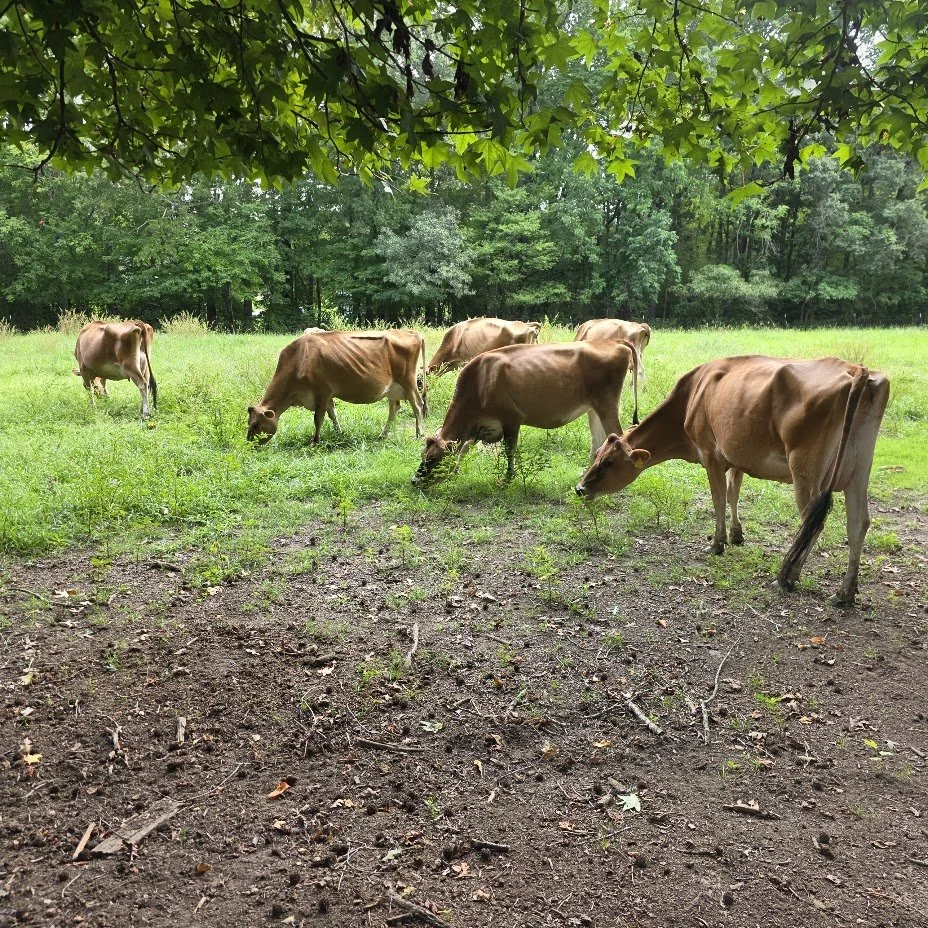
Today, we have six Jersey cows and a growing group of families who come to our farm for their milk. Many of the people who started as customers have become friends, and that has been one of the best parts of this whole journey.
What started with a $5 calf, a minivan, and a family that really didn't know what it was doing eventually led us here.
And we're pretty glad we kept going. ❤️